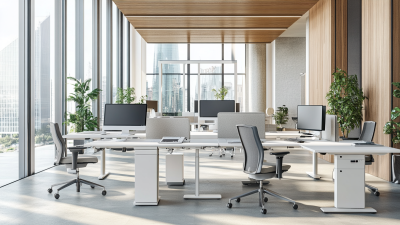
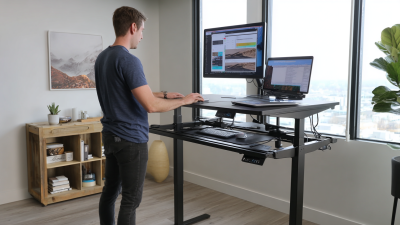
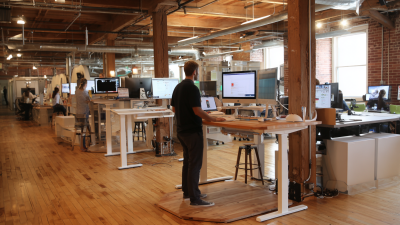
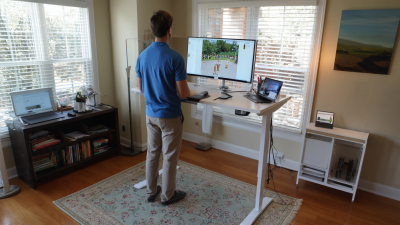
You know, the rise of Standing Desks really signals a shift in how we think about our workspaces. I read somewhere that, according to a 2022 report from Global Industry Analysts, the market for standing desks is expected to hit around $3 billion by 2027. That’s pretty wild! It shows just how much people are starting to see the connection between productivity and health. More folks are realizing that sitting for hours on end can actually be pretty bad for you.
Sitting too long can cause all sorts of health problems—think obesity, heart issues, and more. A study from the American Heart Association even suggests that standing up more could actually lower some of those risks. But, honestly, it’s not always easy for everyone to make the switch. Moving to a standing desk involves both physical and mental adjustments. Some people might feel tired or get sore pretty quickly, at least at first.
Still, I think switching to standing desks can boost your energy and help you get more done. The tricky part is figuring out what works best for you. Companies need to make sure the setups are ergonomic and encourage people to take breaks. Honestly, standing desks aren’t a magic fix for everyone, and tuning into your own comfort and productivity levels is super important to really make it work.
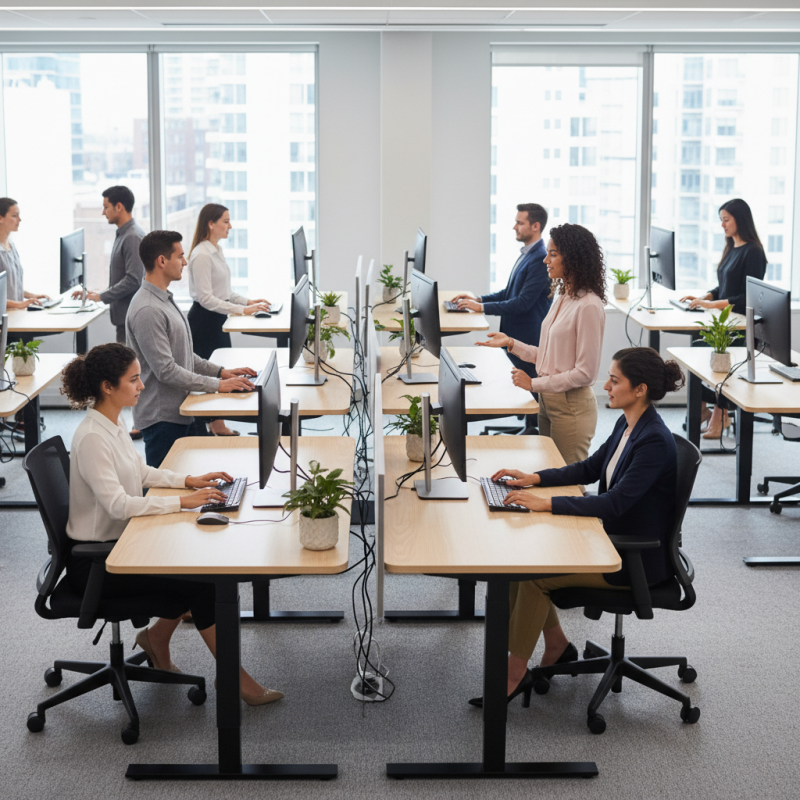
A standing desk is a desk designed to be used while standing or sitting. It can be adjustable, allowing users to change their position. This flexibility can benefit health and productivity.
Research shows that prolonged sitting contributes to various health issues. A study by the American Heart Association found that sedentary behavior increases the risk of heart disease. Switching to a standing desk can help mitigate these risks. In fact, a survey reveaLED that 32% of users felt more productive while using standing desks.
However, standing for long periods also poses challenges. Fatigue and discomfort can arise when standing too long. It is essential to alternate positions throughout the day. Balancing both sitting and standing can enhance comfort and well-being. By thoughtfully integrating a standing desk into your routine, you may improve your overall work experience.
The concept of standing desks has a long and varied history. Originally, they were used by great thinkers and inventors. For instance, Thomas Jefferson is known to have used a desk where he could both sit and stand. In the 20th century, advances in office design made seated work more prevalent, often at the expense of ergonomics and health.
Recent studies by the Journal of Physical Activity and Health highlight alarming statistics. Nearly 70% of desk-bound workers report discomfort. Prolonged sitting can lead to health issues. This shift back to standing desks emerges as a response to the sedentary lifestyle many face today. Researchers have noted that standing can reduce the risk of weight gain and obesity.
Tips for using a standing desk effectively include alternating between sitting and standing. Consider setting a timer to switch positions every 30 minutes. Your posture is crucial; ensure your screen is at eye level to avoid neck strain. Standing shouldn't be uncomfortable. A supportive mat can alleviate pressure on your feet. Remember, a blend of sitting and standing is often ideal. Adjusting to this new style takes time, and reflecting on comfort is important.
Standing desks have gained popularity for several reasons, particularly their health benefits. Research indicates that using a standing desk can significantly reduce back pain. A study published in the "Journal of Physical Activity and Health" found that participants using standing desks experienced a 32% improvement in lower back pain after several weeks. This shows that a simple change in work habits can lead to significant relief.
Moreover, standing desks can enhance productivity. According to a report by the "Occupational Health Psychology" journal, employees using standing desks reported a 10% increase in productivity levels. They felt more energetic and focused on their tasks. Standing desks may also help reduce the risk of chronic diseases. The World Health Organization links sedentary behavior to various health issues, including obesity and cardiovascular disease. Moving more, even while standing, can lower these risks.
However, transitioning to a standing desk is not without challenges. Some people find it tiring to stand for long periods. They might struggle with leg fatigue or discomfort. It is essential to ease into this change and take regular breaks. Balancing standing and sitting may be the key to maximizing benefits. The idea is to be mindful of the body’s needs, allowing adjustments to improve overall well-being.
When exploring standing desks, it’s important to know the types available. There are several categories to consider. Manual Adjustable Desks are popular. They allow users to control their height but require physical effort. Electric standing desks are also common. They enable height adjustments at the push of a button, offering convenience.
According to a report from the American Journal of Preventive Medicine, standing desks can reduce sedentary time by up to 2 hours a day. This shows the potential benefits for those who sit for long periods. However, it's crucial to choose a standing desk based on your needs. Some may prefer sit-stand converters. These compact options allow you to turn any regular desk into a standing one.
Another option is the L-shaped standing desk. This design provides ample workspace while offering the benefits of standing. Yet, these desks may not fit every office layout. Striking a balance between standing and sitting is essential. Prolonged standing can lead to discomfort, so having a plan for breaks is advisable. Investing in a standing desk requires careful consideration of your workspace, preferences, and health goals.
| Type of Standing Desk | Features | Benefits | Price Range |
|---|---|---|---|
| Manual Standing Desk | Adjustable height, typically requires manual adjustment | Affordable, simple design | $100 - $300 |
| Electric Standing Desk | Motorized adjustments, programmable height settings | Convenient, effort-free height adjustments | $300 - $800 |
| Height-Adjustable Desk Converter | Sits on top of a regular desk to allow height adjustment | Cost-effective and portable | $60 - $300 |
| L-Shaped Standing Desk | Offers an L-shaped workspace, adjustable height | Spacious work area, good for multitasking | $400 - $900 |
| Compact Standing Desk | Designed for small spaces, adjustable height | Space-saving and practical | $150 - $500 |
Transitioning to a standing desk can be a game-changer for productivity and health. A study by the International Journal of Environmental Research and Public Health highlighted that standing while working can reduce lower back pain by up to 32%. However, the move isn't always easy. Many people struggle initially with discomfort in their legs or feet.
It’s essential to start slowly. Begin by standing for 15 to 30 minutes every hour. Gradually increase your standing time as your body adjusts. Consider using a footrest to shift your weight and engage muscles. By keeping your posture in mind, you can alleviate pressure on your back. Research from the CDC also indicates that standing desks may lead to improved mood and decreased fatigue, boosting overall engagement in tasks.
Additionally, ensure you have the right desk height. Your elbows should be at a 90-degree angle while typing. If possible, invest in a cushioned mat to improve comfort. After a few weeks, reflect on your experience. Are you feeling more energetic, or is fatigue creeping in? Adjust your routine based on how your body responds.
Standing desks can enhance comfort and productivity significantly. Studies show that standing while working can reduce back pain by up to 32%. This shift in posture often leads to better focus and less fatigue. However, simply using a standing desk isn’t enough. It’s crucial to adopt specific practices to maximize its benefits.
One effective tip is to alternate between sitting and standing. Experts recommend a 1:1 ratio of sitting to standing time. For example, if you stand for 30 minutes, sit for the same amount of time. This prevents fatigue and encourages blood circulation. You might also want to consider using an anti-fatigue mat. These mats can reduce discomfort, allowing you to stand longer comfortably.
Another aspect to consider is your screen height. Ideally, it should be at eye level. This helps maintain a neutral neck position. Improper screen height can lead to strain, making standing less enjoyable. It’s also helpful to keep your elbows at a 90-degree angle. This positioning fosters a more ergonomic workspace. Pay attention to these details to ensure you gain the maximum advantages from standing desks. Embrace the adjustments and observe how they impact your work experience.
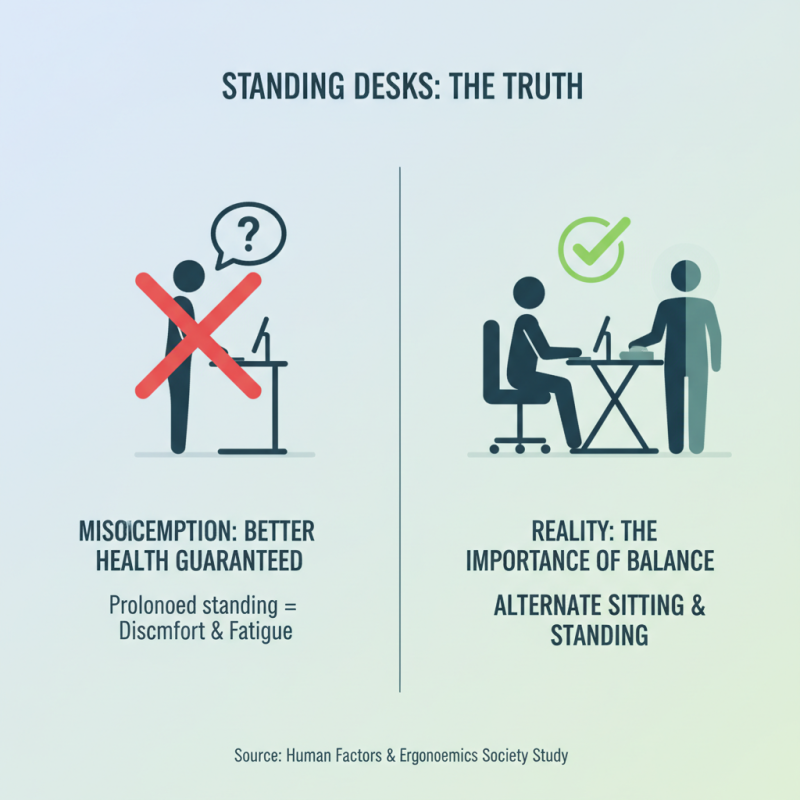
Many people believe that standing desks guarantee better health. This misconception overlooks the importance of balance. A study from the Human Factors and Ergonomics Society revealed that prolonged standing can lead to discomfort and fatigue. Many users report feeling more tired after extended hours at a standing desk. The key here is to alternate between sitting and standing throughout the day.
Another myth is that standing desks will boost productivity significantly. Research from the University of Minnesota found mixed results on productivity levels. Some users felt more energetic, while others experienced distractions. It’s essential to consider individual preferences and workplace environment. Not every person thrives in a standing position, and some may find it harder to concentrate.
Lastly, there's a belief that standing desks are an instant solution for weight loss. While they might promote slight activity, simply standing does not burn considerable calories. According to the American Heart Association, only moderate to vigorous physical activity affects weight management. Understanding these misconceptions is crucial. It helps users approach standing desks with realistic expectations.
: The article aims to inform readers about important issues related to the topic.
The content is directed at individuals interested in understanding the subject matter better.
Various aspects of the topic are explored, highlighting both benefits and drawbacks.
Relevant data is included, but it may not reflect the most current information available.
Yes, the article gives real-life situations to illustrate key points.
Readers should reflect on their own views and question the information presented.
The article encourages readers to engage with the topic more deeply.
Yes, some conclusions might not apply universally and deserve scrutiny.
They can use the insights to enhance personal understanding or decision-making.
The article challenges common beliefs, urging critical thinking and openness.
Standing desks have gained popularity as an alternative to traditional Sitting Desks, primarily focusing on promoting a healthier work lifestyle. Historically, the concept of standing desks can be traced back centuries, with notable figures using them to enhance productivity. The health benefits associated with standing desks include reduced risk of weight gain, improved posture, and potentially lower risk of chronic diseases.
Various types of standing desks are available, catering to different preferences and work environments. Transitioning to a standing desk effectively involves gradual adjustments to allow the body to adapt comfortably. To maximize both comfort and productivity, users should consider ergonomic setups and incorporate regular movement. Despite some common misconceptions, standing desks can be part of a balanced approach to work, combining both standing and sitting for optimal health and efficiency.